Cream vs. Sauce vs. Crunch: Comparing 6 Pudding Toppings
Pudding is forgiving. You can under-stir it, chill it a day too long, and spoon it into mismatched glasses, and it will still taste good. Toppings are where a bowl becomes a dessert. They decide whether the final bite is soft or crackling, sweet or sharp, plain or scented with vanilla and salt.
Six topping types cover almost everything you might want on a pudding: two creams, two sauces, two crunches. They behave very differently in the fridge and on the spoon, so it helps to know what each one is actually doing before you start layering.
Two Creams: Whipped and Poured
Whipped cream
Start with cream that has at least 30 percent fat and chill it hard, along with the bowl and whisk. Warm cream whips slowly and never gets the body you want. Add one to two tablespoons of sugar per cup and a pinch of salt, then whip past the bubbly stage to soft peaks for folding over warm pudding, or medium peaks for piping. Stop early rather than late: over-whipped cream turns grainy, and while you can rescue it by folding in a splash of fresh cream, the texture never fully returns.
For a topping you plan to hold, use powdered sugar rather than granulated; the small amount of cornstarch in it helps the foam stay put. A spoonful of mascarpone, crème fraîche, or cream cheese does the same job and adds a gentle tang. Realistically, stabilized whipped cream looks its best within four to six hours, so whip it the same day you serve.
Crème anglaise
This is the thin pouring custard you see under bread pudding and sticky toffee pudding. Roughly four egg yolks per cup of dairy, cooked gently with sugar and vanilla until it coats the back of a spoon — around 170 to 180°F — then strained and chilled fast over an ice bath. Keep the heat low and stir constantly; the moment it looks like it might scramble, pull the pan off and keep stirring.
Its sweetness is moderate and its richness is high, which makes it the right choice for dense, starchy puddings that need loosening rather than more sugar. Because it is an egg custard, keep it refrigerated and use it within two or three days.
Two Sauces: Caramel and Fruit
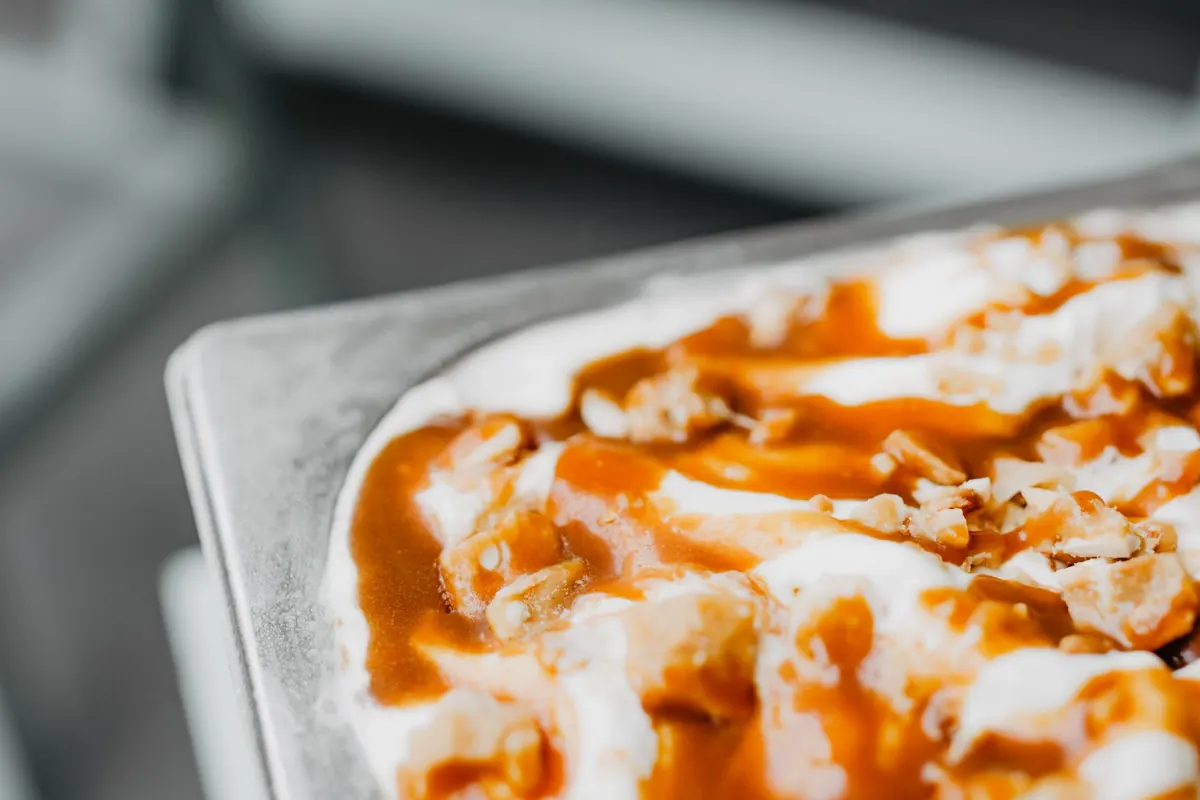
Caramel and fruit sit at opposite ends of the sweetness scale, and most puddings want one of each nearby. Caramel brings butter, salt, and a faint bitterness if you take the sugar to a deep amber before adding the cream and butter. Darker caramel tastes less sweet, which is why it works so well on chocolate, banana, coffee, and brown-butter puddings. It keeps for about two weeks in the fridge; warm it just enough to pour, because cold caramel is closer to glue.
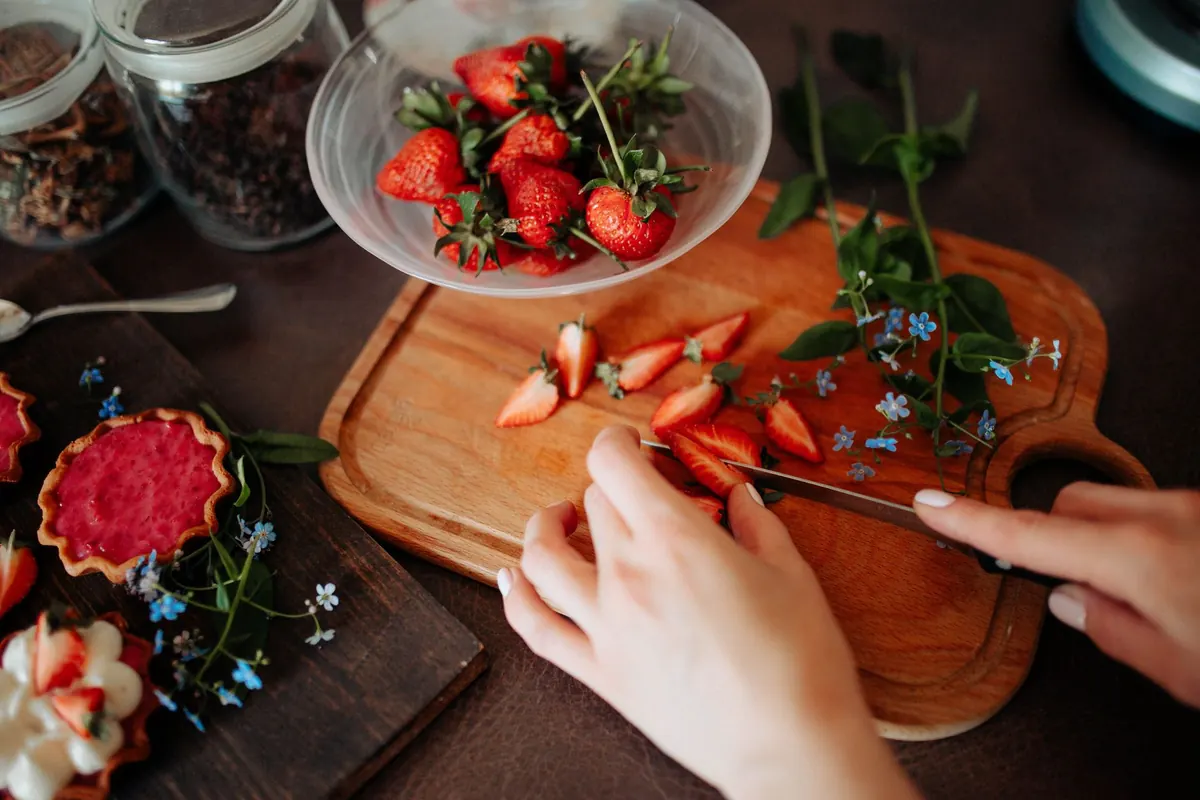
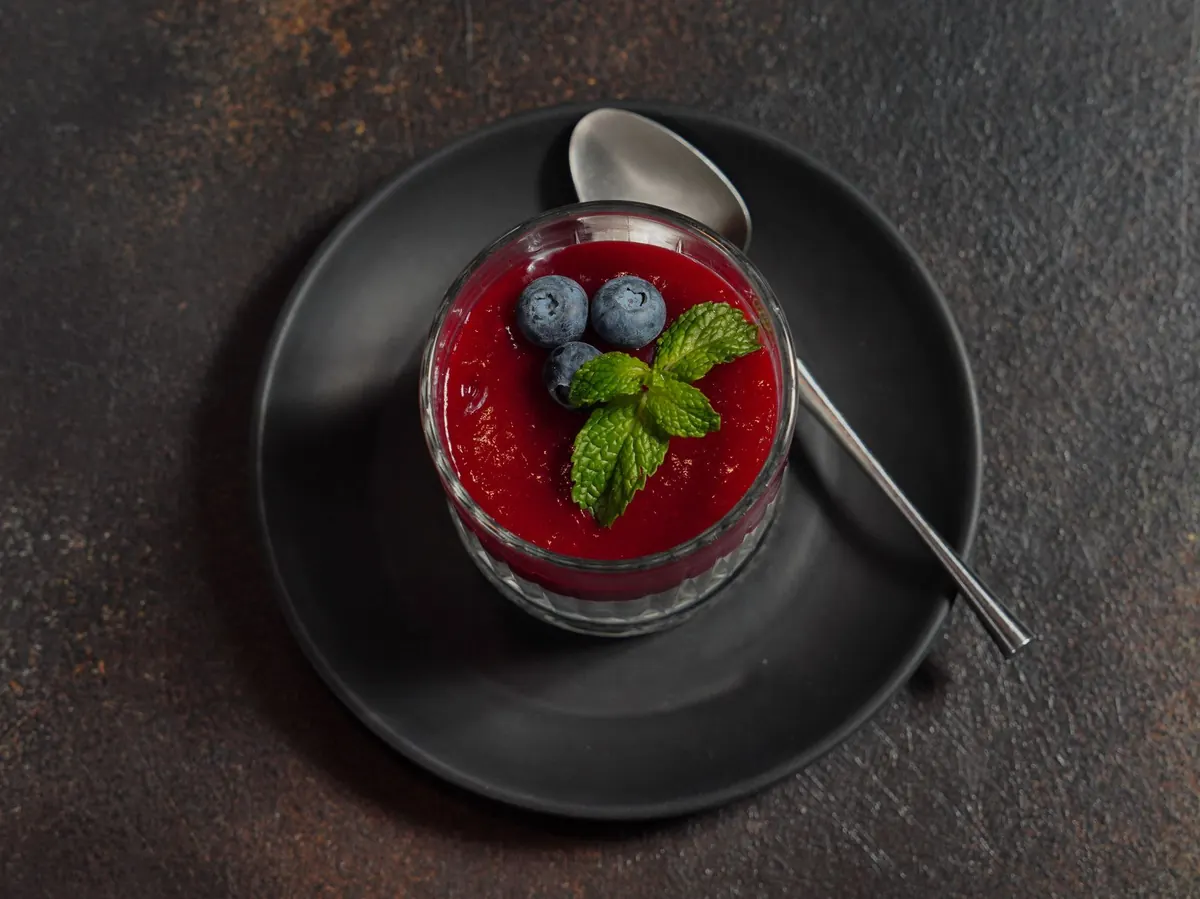
Fruit sauce is the acid in the room, and acid is what keeps a creamy dessert from tasting flat. A compote keeps some texture: cook chopped fruit with a little sugar and lemon for ten to fifteen minutes until the pieces soften but hold their shape. A coulis is smoother — blend and strain — and suits delicate puddings like panna cotta or almond milk pudding. Raspberries, cherries, plums, rhubarb, and mango all work; so does a bowl of berries macerated with sugar and lemon for twenty minutes. Most fruit sauces keep about a week.
A good topping does one of three jobs: it cuts sweetness, adds contrast, or carries flavor. Anything that does none of those is decoration.
Two Crunches: Cookie Crumb and Toasted Nuts
Crunch is the topping people remember, mostly because it is the one most often missing. Cookie crumbs — graham, digestive, speculoos, shortbread, or leftover cake — get much better with a toss in melted butter and a pinch of salt, then eight to twelve minutes in a 325°F oven until they smell toasted. Cool them completely before storing; warm crumbs steam and go soft.
Nuts need the same treatment. Spread them on a sheet pan at 350°F for six to ten minutes, then let them cool before chopping so they stay crisp. For praline, caramelize sugar, stir in the nuts, spread the mixture thin on parchment, and crush it once cold. Toasted coconut, cacao nibs, crushed pretzels, and honeycomb all play in the same league.
One rule matters more than the recipe: add crunch at the last minute. Layered ahead of time, it absorbs moisture from the pudding and disappears.
Comparing Them Side by Side
- Whipped cream — airy, low to moderate sweetness, best used within a day, pairs with almost anything, especially warm or spiced puddings.
- Crème anglaise — silky and pourable, moderate sweetness, keeps two to three days, made for bread pudding, rice pudding, and dense baked custards.
- Caramel sauce — glossy and rich, high sweetness unless taken dark, keeps about two weeks, pairs with chocolate, banana, coffee, and salt.
- Fruit compote or coulis — juicy and tart, low to moderate sweetness, keeps about a week, cuts through cream, vanilla, and coconut.
- Cookie crumb — sandy and crisp, moderate sweetness, keeps a week airtight, ideal on soft, cold puddings like butterscotch or chocolate.
- Toasted nuts or praline — hard crunch, low sweetness, best within a few days, adds depth to caramel, coffee, and fruit.
Pairings That Earn Their Place
Butterscotch pudding with lightly sweetened whipped cream and toasted pecans is the classic combination for good reason: the nuts keep the cream from feeling like a cloud. Chocolate pudding wants salted caramel and flaky salt rather than more sugar. Rice pudding and tapioca are best with fruit — a cherry compote or mango coulis — because the starch needs acid more than it needs fat. Bread pudding and sticky toffee pudding are the two cases where crème anglaise is not optional; it soaks into the edges and turns the whole thing into one texture.
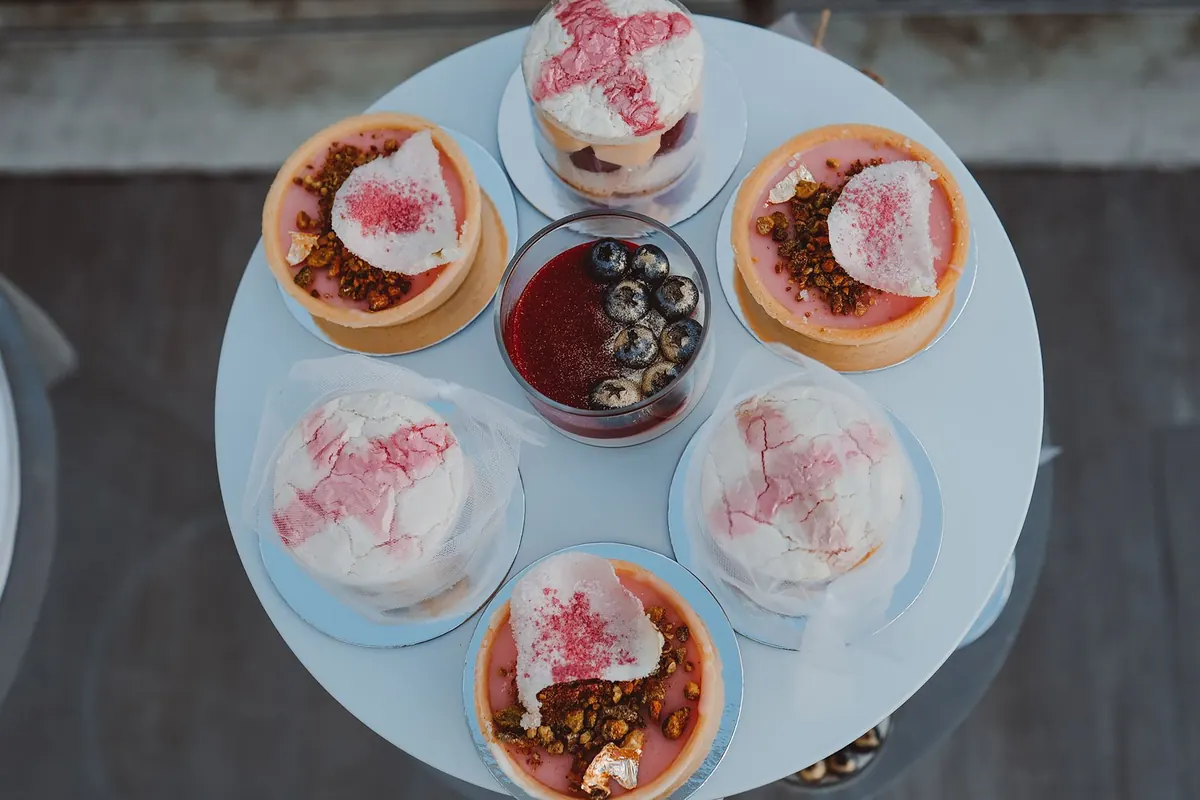
When you build a bowl, think in contrasts rather than categories. Two soft toppings and nothing crisp tastes like soup. Two sweet toppings and nothing tart tastes heavy. One cream, one sauce, one crunch is a reliable formula, and you can swap within each slot depending on what is in the fridge.
Build Your Own in Three Steps
- Choose the base first, then the sauce. Dense and starchy puddings take a pourable cream or a thin coulis; light, airy puddings take something thicker.
- Balance the sugar. If the pudding is already sweet, go dark on the caramel or tart on the fruit. If it is barely sweet, whipped cream with a little extra sugar is the easier fix.
- Add the crunch at the table. Keep crumbs and nuts in a small bowl and spoon them over each serving, so nothing sits and softens.
Serve in small, clear glasses if you want the layers to show, and taste everything at the temperature you plan to serve it. A topping that tastes balanced straight from the fridge can read as dull once it hits a warm pudding. Keep your components separate until the last minute, and you get the best part of a pudding: a spoonful that is soft, tart, and crisp all at once.