Dinner Party Pudding Presentation Checklist: From Chill to Serve
Pudding is a quiet dessert with a loud failure mode. It sits in the fridge looking immaculate, then loses its nerve somewhere between the shelf and the table: a wobble that turns into a slump, a caramel sauce that tightens, a mint leaf that wilts into a sad green smudge on the plate. None of that is a recipe problem. It is a timing and staging problem, and those are the easiest ones to fix.
What follows is the checklist I run through before any dinner party where pudding is the finale. It assumes you have already made the thing. From here on, it is all chilling, tools, and the last ten minutes.
Start With the Cold Chain
Set puddings depend on temperature for their shape, and a busy kitchen is warm. Before anything else, clear a shelf in the fridge that is wide enough to hold every ramekin, glass, or mould flat and unstacked. Stacking is how you get fingerprints in a set custard and a lopsided edge on a panna cotta.
Chill the plates too. A cold dessert on a room-temperature plate starts sweating at the rim within a minute, and that thin ring of condensation reads as sloppiness. Thirty minutes in the fridge is enough. The reverse is also true: if you are serving sticky toffee pudding or a warm chocolate fondant, warm the plates in a low oven instead. Match the plate to the pudding, not to your usual habit.
Give set puddings more time than the recipe suggests. A panna cotta that needs four hours will be more reliable at six, especially if your fridge is full and working harder.
Work Backwards From Dessert Hour
Decide when pudding hits the table, then count backwards. Write the times on a sticky note and put it on the fridge door. This single habit removes most of the panic.
- Two or three days ahead: make anything that improves with time — sauces, candied nuts, crumble toppings, poached fruit. Store them separately.
- Morning of: make the puddings that need a long set. Pots de crème, panna cotta, mousse, and set custards all belong here.
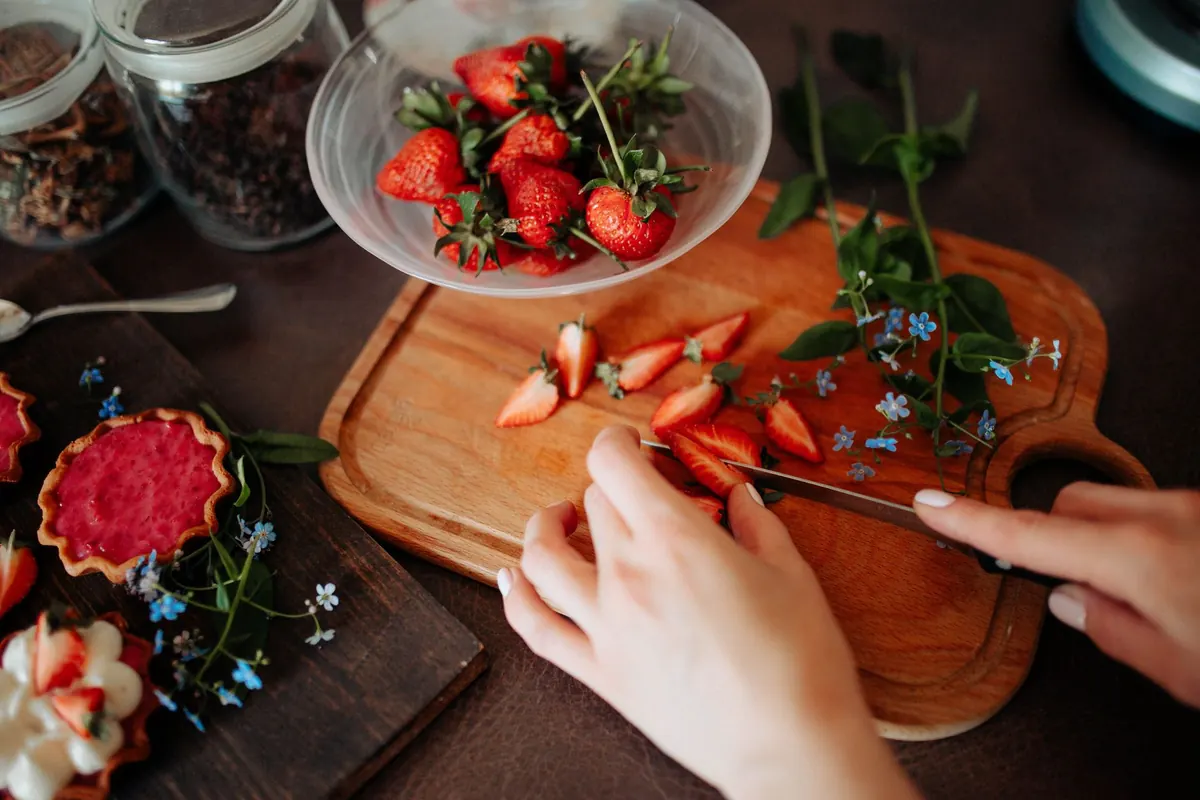
- Two hours before guests arrive: cut fruit, toast nuts, whip cream to soft peaks, fill a squeeze bottle with sauce, and chill your plates.
- One hour before: check the set. Tilt a ramekin gently — a proper set custard holds with a soft, even wobble. Loosen cold sauces by standing the jar in warm water.
- As the main course is cleared: unmould, wipe rims, and return the plates to the fridge. Do not garnish yet.
- Five minutes before serving: torch sugar, spoon cream, add crisp elements, and carry everything out on one tray.
Tools Worth Keeping Within Reach
You do not need a pastry kitchen. You need a small set of tools already laid out on a tray before you start plating, so you are not opening drawers with sticky fingers.
- A small offset spatula and a thin palette knife for lifting and smoothing
- A fine-mesh sieve for dusting cocoa or icing sugar evenly
- A kitchen torch for brûléeed tops and for warming moulds before unmoulding
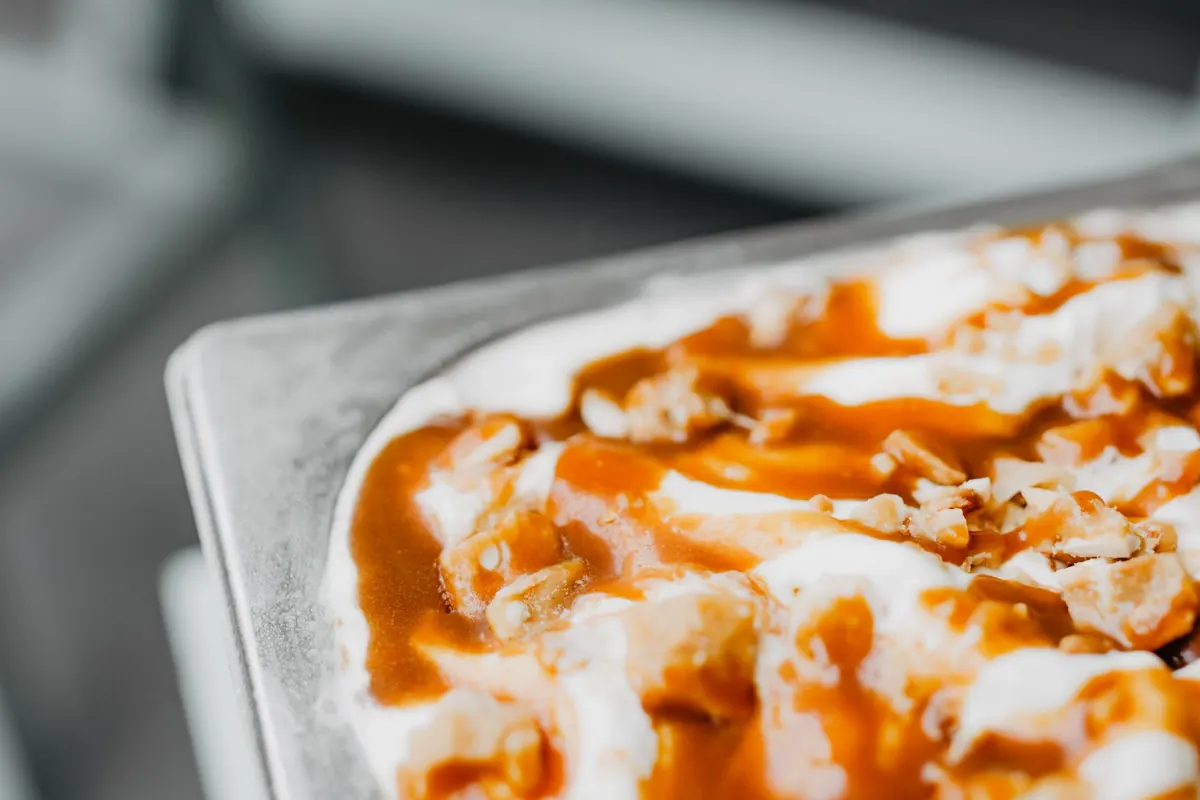
- A squeeze bottle for sauce dots and thin lines — far more controlled than a spoon
- Two spoons for quenelles of cream or sorbet, warmed in hot water and dried
- A damp cloth and a dry cloth for wiping plate rims
- Chilled plates, stacked somewhere cool and out of the way
Plating by Texture
Soft set puddings
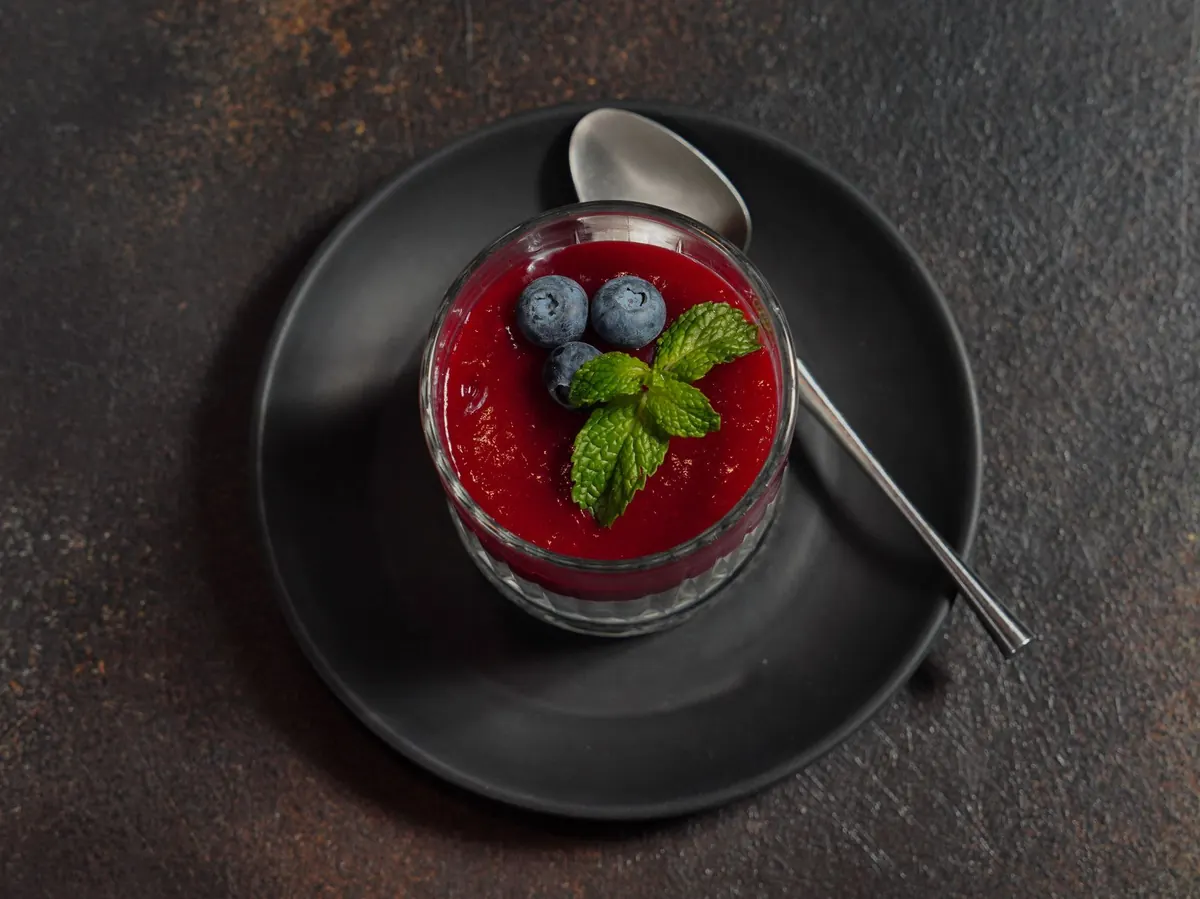
Panna cotta, custards, and mousses want negative space. Place the pudding off-centre, let one sauce pool gather beside it rather than underneath, and keep the plate otherwise quiet. One tall element and one low element is usually enough.
Unmoulded puddings and cakes
Press the pudding gently onto the centre of the plate rather than dropping it. If it slumps, do not fight it — a spoonful of sauce over the top and a scatter of crunch will make it look deliberate.
Layered puddings and trifles
Serve in clear glass so the layers do the decorating. Wipe the inside of the glass with a paper towel before adding the top layer; streaks of cream on the glass undo an otherwise tidy trifle.
Plating is subtraction. If you are adding a fourth element to fix the look of the plate, take one away instead.
Garnishes That Survive the Walk to the Table
The garnish rule for pudding is the same as for any dessert: anything crisp goes on last, anything wet goes on first. Sugared nuts, tuile shards, honeycomb, and toasted coconut lose their snap within minutes of meeting cream or sauce.
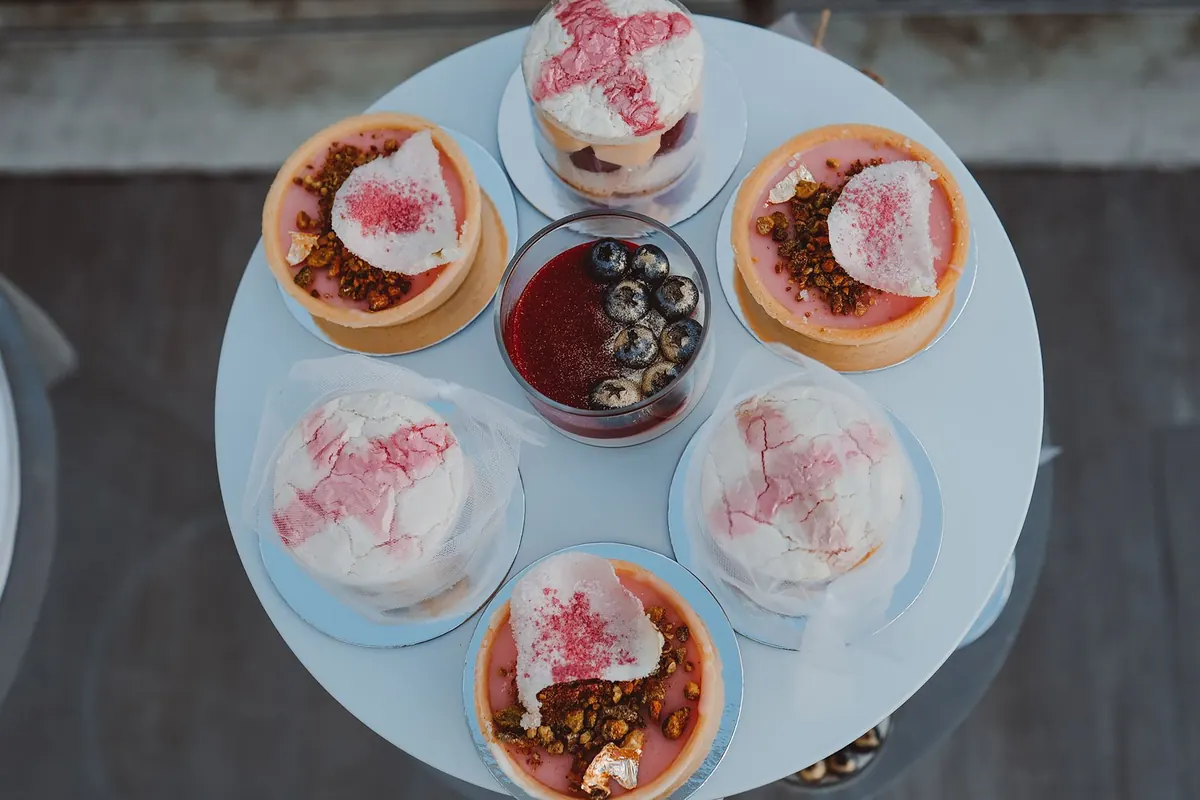
- Sturdy: toasted nuts, cocoa nibs, freeze-dried berries, shaved chocolate, candied citrus peel, shortbread or biscuit shards
- Delicate but safe: small mint or basil leaves, citrus zest, a light dusting of cocoa or cinnamon through a sieve
- Use sparingly: edible flowers, which bruise quickly, and fresh berries, which bleed juice into cream
- Skip: anything that needs to be added at the table to look right
Dry your mint leaves if you have rinsed them, and zest only the coloured part of the citrus — the white pith turns bitter and dulls the colour. A single perfect leaf reads better than a scattered handful.
The Last Five Minutes
This is where decorated puddings are won or lost. Gather everything on one tray: plates, cream, garnish bowls, torch, cloths. Wipe each rim with the damp cloth, then the dry one, working around the plate once and turning it as you go.
Torch brûléeed sugars now, not earlier, and give the sugar thirty seconds to harden before it travels. Add cream, then crunch, then the final leaf. Carry the tray with both hands and set plates down from the same side, in the same order, so the table looks composed rather than assembled at random.
The Check-and-Go Routine
Before you leave the kitchen, run six checks in order: plates cold or warm as needed; rims clean; sauce loosened and in the bottle; crunchy garnish still in its bowl; cream holding soft peaks; tray ready by the door. If any answer is no, fix that one thing and go. Pudding waits for no one, and a plate that reaches the table on time will always beat a plate that reaches it perfect ten minutes late.
Practise the routine once on a quiet night with a simple set custard and a spoon of cream. By the time you are cooking for eight, the whole sequence takes four minutes and your hands already know the way.
Photo: cottonbro studio / Pexels